Introduction
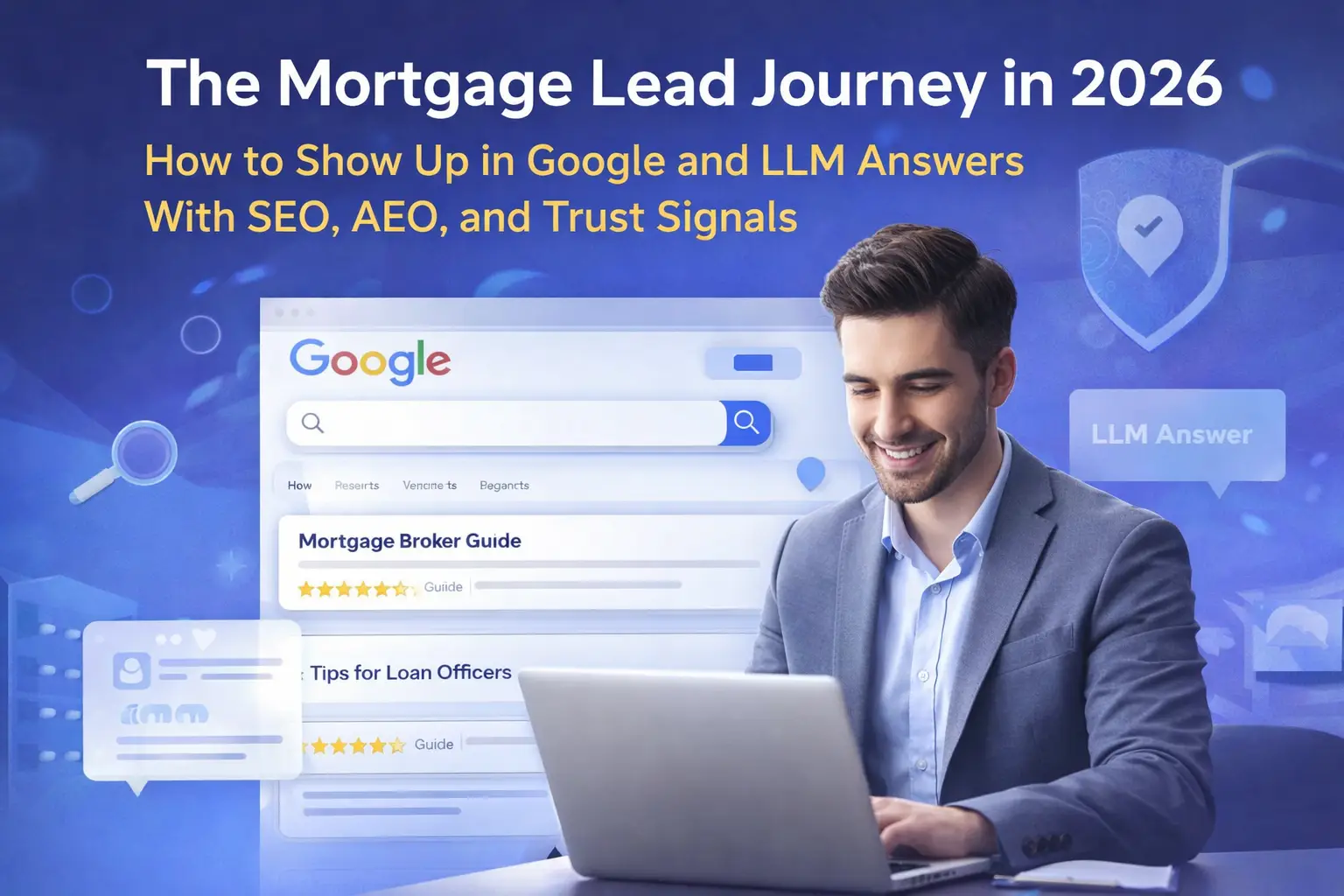
The landscape of mortgage leads is evolving at a rapid pace, particularly as we move into 2026. With advancements in technology and shifts in consumer behavior, mortgage brokers and loan officers must adapt their strategies to ensure visibility and trust in the digital marketplace. This article will explore the mortgage lead journey, focusing on how to enhance your presence on search engines and in language model (LLM) answers through search engine optimization (SEO), answer engine optimization (AEO), and establishing trust signals.
Understanding the Mortgage Lead Journey
The mortgage lead journey begins long before a potential borrower reaches out to a lender. It includes a series of stages, from awareness to consideration, and ultimately, to conversion. Each stage presents unique opportunities for mortgage professionals to engage with potential clients and guide them through their decision making process. Understanding this journey allows brokers and loan officers to tailor their marketing strategies to meet the specific needs of their audience.
As consumers increasingly rely on online searches to find information about mortgage options, the mortgage lead journey is heavily influenced by digital marketing techniques. Today, borrowers seek not only basic information about rates and products but also insights on the entire borrowing experience. Providing comprehensive, relatable, and actionable content is crucial for capturing their attention and converting leads into clients.
The Role of SEO in the Modern User Journey
Defining SEO for Mortgage Brokers and Loan Officers
Search engine optimization (SEO) is the practice of improving a website’s visibility on search engines like Google. For mortgage brokers and loan officers, SEO involves optimizing web pages with relevant keywords, ensuring that content answers the questions potential clients are asking, and making technical adjustments to enhance site performance. The ultimate goal is to rank higher in search engine results pages (SERPs), effectively increasing the likelihood of attracting qualified leads.
Successful SEO strategies encompass various elements, including keyword research, on page optimization, content creation, and link building. Mortgage professionals must identify relevant keywords that prospective borrowers are likely to use when searching for mortgage related information. This can include terms such as best mortgage rates, how to apply for a mortgage, or first-time homebuyer tips. By strategically implementing these keywords within their content, brokers can improve their chances of appearing in search results.
Importance of Intent-Based Content
In the realm of SEO, understanding user intent is paramount. Intent-based content focuses on the motivations behind a user’s search query, allowing brokers to create tailored content that meets specific needs. For instance, a potential borrower searching for how to refinance my mortgage is likely looking for detailed information on refinancing options, the process involved, and potential savings.
By aligning content with user intent, mortgage professionals can provide value while also improving their search rankings. This includes creating blog posts, FAQs, and guides that address common questions and concerns throughout the mortgage journey. The more informative and helpful the content, the more likely it is to resonate with potential clients, ultimately leading to increased trust and conversions.
Leveraging AEO for Enhanced Visibility
What is AEO and Why it Matters
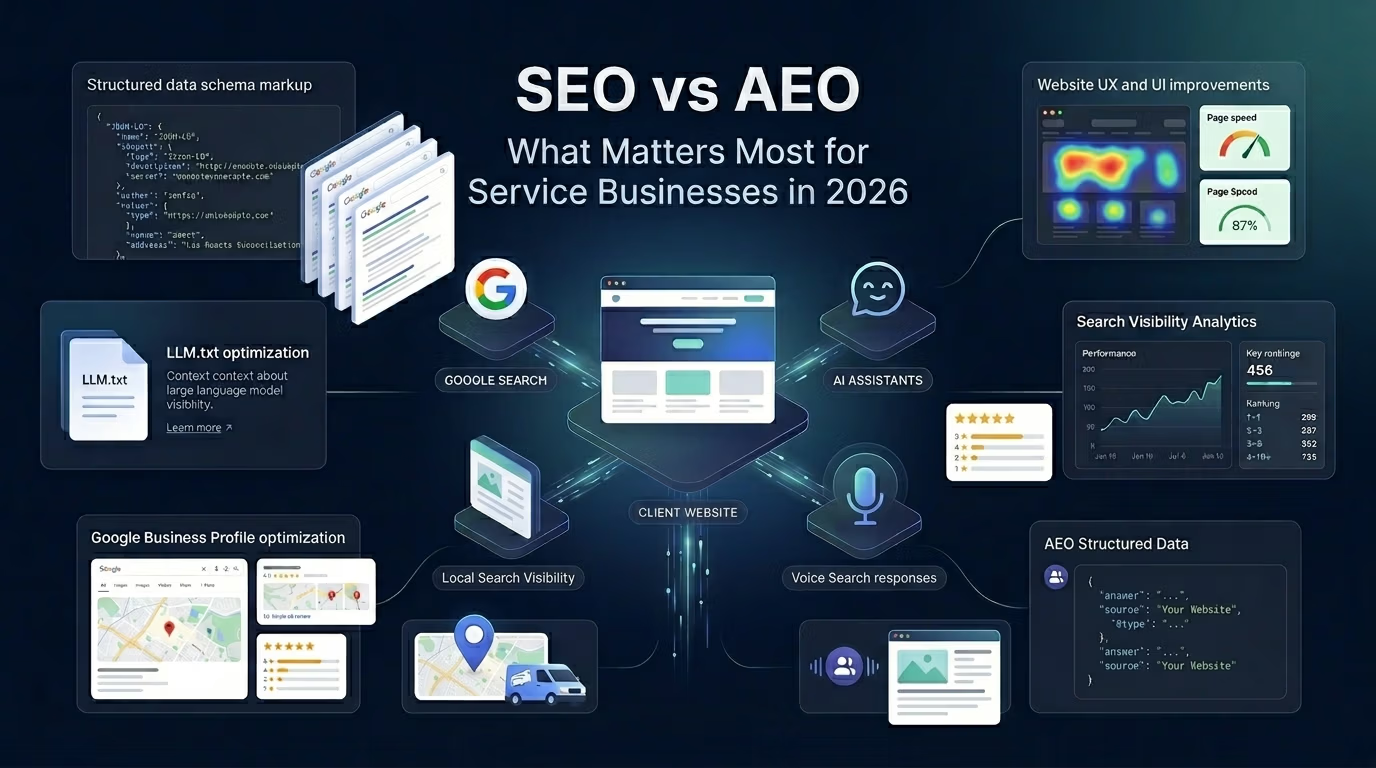
Answer Engine Optimization (AEO) is an emerging focus in digital marketing that enhances how content appears in direct answers provided by search engines. With the rise of voice search and AI-driven search results, AEO aims to ensure that content is optimized for concise answers that meet user queries effectively. For mortgage brokers and loan officers, leveraging AEO can significantly enhance visibility, as more users turn to search engines for immediate answers rather than sifting through multiple links.
By optimizing for AEO, mortgage professionals can position themselves as trusted sources of information. This involves structuring content to answer specific questions clearly and succinctly, often using bullet points, lists, or rich snippets that are favored by search engines. When content is optimized for AEO, it has a higher likelihood of appearing in featured snippets, which can drive significant traffic and lead generation.
Creating Content That Appears in LLM Answers
The integration of LLMs into search engines has transformed how information is retrieved and presented. Mortgage brokers can capitalize on this by creating content that is not only informative but also structured to align with the algorithms used by LLMs. This includes focusing on entity-based search, where content is created around specific themes, entities, and clear connections between them.
To effectively create content that appears in LLM answers, brokers should utilize question and answer formats, incorporate relevant keywords naturally throughout their text, and provide context rich information that answers common inquiries. Engaging storytelling and case studies that reflect real life scenarios can also enhance the appeal of the content, making it more likely to be featured in LLM responses.
Building Trust: The Key to Converting Leads
Utilizing Citations and Reviews
Trust is a vital component in the mortgage industry, as borrowers are often making significant financial decisions that can impact their lives for years to come. Establishing trust through citations and reviews can greatly influence a potential client’s decision to work with a particular mortgage broker. Citations refer to online mentions of a business, such as listings in directories, while reviews provide social proof of a broker’s credibility and service quality.
To build trust, mortgage professionals should actively encourage satisfied clients to leave positive reviews on platforms such as Google My Business, Yelp, and social media. Responding to reviews, both positive and negative, demonstrates a commitment to customer satisfaction and can enhance a broker’s reputation. Additionally, ensuring that business information is consistent across all platforms can help reinforce trust and credibility with potential clients.
Ensuring Entity Consistency Across Platforms
Entity consistency involves maintaining uniformity in how a business is represented across various online platforms, including websites, social media, and directory listings. For mortgage brokers and loan officers, this includes ensuring that the business name, address, phone number, and other pertinent details are consistent everywhere they appear online. Inconsistent information can lead to confusion and distrust among potential clients, which can negatively impact lead generation.
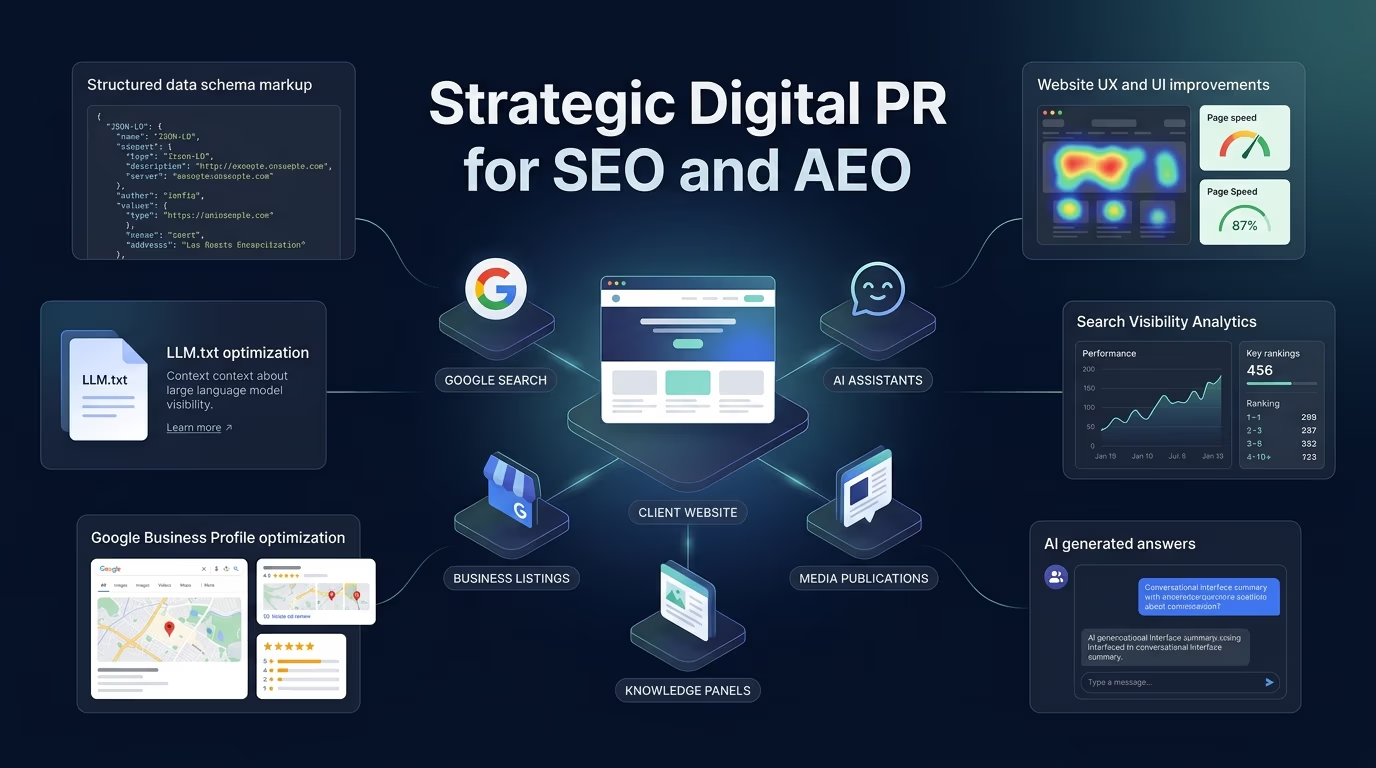
To enhance entity consistency, mortgage professionals should conduct regular audits of their online presence, confirming that all information is accurate and up to date. Utilizing structured data markup can also help search engines understand and verify the information, thereby reinforcing trust signals associated with the business. The more reliable the entity, the more likely it is to rank higher in search results and attract qualified leads.
Technical SEO Factors for Success
Implementing Schema Markup
Schema markup is a form of code that can be added to a website to help search engines understand the content better. For mortgage brokers, implementing schema markup related to services, reviews, and local business information can greatly enhance visibility in search results. It allows search engines to present rich snippets that contain additional details, such as ratings, prices, and availability, which can attract more clicks.
By utilizing schema markup, brokers can provide search engines with specific information about their services, which can improve the likelihood of appearing in relevant searches. For example, adding schema for mortgage types, lender details, and interest rates can help the business stand out in a competitive market, ultimately leading to higher visibility and increased lead generation.
The Importance of Internal Linking
Internal linking refers to the practice of linking to other pages within a website. It is an essential aspect of technical SEO that helps search engines crawl and index a site more effectively. For mortgage brokers, implementing a strategic internal linking structure can improve user navigation and guide potential clients through the content journey, enhancing their overall experience.
By linking related articles, guides, and services, brokers can keep visitors engaged on their site for longer periods, which can positively impact search rankings. Additionally, internal links can help distribute page authority across the site, ensuring that important content receives the visibility it deserves. Mortgage professionals should focus on creating a logical internal linking strategy that connects valuable resources and encourages users to explore more of what the business offers.
Optimizing Site Speed for Better User Experience
In today’s fast paced digital environment, site speed is a critical factor that can significantly impact user experience and search rankings. A slow loading website can frustrate users and lead to higher bounce rates, ultimately affecting lead generation. For mortgage brokers, optimizing site speed is essential to keep potential clients engaged and encourage them to explore available services.
To enhance site speed, mortgage professionals should consider various factors, such as image optimization, minimizing HTTP requests, and leveraging browser caching. Regularly assessing site performance using tools like Google PageSpeed Insights can help identify areas for improvement. By prioritizing site speed, brokers can create a more enjoyable experience for visitors, increasing the likelihood of converting leads into clients.
Tracking Your Progress
Setting Up Analytics for Mortgage Leads
Measuring the effectiveness of SEO and marketing strategies is crucial for mortgage brokers seeking to optimize their lead generation efforts. Setting up analytics tools, such as Google Analytics, allows professionals to track key performance indicators (KPIs) related to website traffic, user engagement, and conversions. By monitoring these metrics, brokers can gain valuable insights into what is working and what may need adjustment.
Mortgage professionals should focus on tracking metrics such as organic traffic, bounce rates, conversion rates, and average session duration. Analyzing this data can help identify trends, pinpoint areas for improvement, and inform future marketing strategies. Regularly reviewing analytics data enables brokers to stay agile and adapt to changes in the market or consumer behavior.
Measuring Success and Making Adjustments
Success in lead generation is not a one-time achievement; it requires continuous evaluation and adjustment. Mortgage brokers should regularly assess the impact of their SEO and marketing efforts to determine if they are meeting their goals. This can involve analyzing the effectiveness of specific campaigns, content types, or keywords that drive leads.
Based on the insights gained from analytics, brokers should be willing to pivot their strategies as needed. Whether it involves refining content, adjusting SEO tactics, or exploring new marketing channels, staying responsive to data can lead to improved outcomes. Consistent evaluation and refinement can help mortgage professionals maintain a competitive edge in a rapidly evolving landscape.
Conclusion
Recap of Key Strategies
The mortgage lead journey is complex and multifaceted, requiring brokers and loan officers to implement a variety of strategies to enhance visibility, build trust, and convert leads. By focusing on SEO, AEO, and technical factors, professionals can position themselves as trusted sources of information while effectively attracting potential clients. Key strategies include creating intent-based content, leveraging schema markup for enhanced visibility, maintaining entity consistency, and prioritizing site speed.
Summary of Main Points
In summary, mortgage professionals must adapt to the evolving digital landscape by employing effective strategies that address the needs of potential clients. By utilizing SEO and AEO techniques, optimizing technical aspects of their websites, and building trust, brokers can significantly enhance their chances of capturing and converting leads in 2026.
Ready to Win More Mortgage Leads From Search?
optiseo helps mortgage brokers and loan officers show up in Google and LLM answers by improving the full user journey, strengthening citations and trust signals, and building SEO plus AEO systems that convert. Answer a few quick questions and we will recommend the best next step for your visibility and lead flow.